
We probably Communication Skills more than we realise. From the moment we wake up, there is usually something to say. Maybe it is a quick conversation with family, a reply to a WhatsApp message, a call from a friend, or a question from someone at work. Most of these conversations are so normal that we rarely think about whether we are communicating well.
The situation changes when we actually care about the Communication Skills.
Imagine sitting in a job interview. You have already prepared your qualifications and know what you have studied. Then the interviewer asks, “Tell me about yourself.” Suddenly, the answer you had in your head does not sound as clear anymore. You start thinking too much, speak quickly, or forget the point you wanted to make.
Something similar can happen during a presentation, a group discussion, or even an uncomfortable conversation with Communication Skillssomeone close to you.
This is where Communication Skills can make a real difference.
Communication Skills is also not a talent that only a few people are born with. It is a Communication Skills that gets better with practice. You can become more comfortable speaking, learn to listen properly, and get better at explaining what you actually mean without changing your personality.
Why Are Good Communication Skills Important?

Communication affects work, studies, relationships, interviews, and many small situations that happen throughout the day.
At work, for example, you may be asked to complete a task but not fully understand the instructions. Instead of guessing and spending hours doing the wrong thing, asking one clear question can save a lot of time.
The same applies when you are giving an update. Saying “I am working on it” does not tell someone very much. Explaining what has been completed and what is still pending gives them a clearer picture.
Better communication cannot guarantee that people will always agree with each other.
People have different opinions, personalities, and expectations.
What communication can do is give people a better chance to understand what is actually being said.
And being a good communicator does not require being the loudest person in the room. Quiet people can communicate extremely well when they listen carefully and speak when they have something useful to add.
1. Learn to Listen Properly

Listening sounds easy until you notice how often people listen while preparing their own response.
Someone may be telling you a story, and halfway through, you suddenly remember something similar that happened to you. Your mind starts preparing your reply before the other person has finished.
You heard the conversation, but you were not fully present in it.
When someone is talking about something important, try giving them your attention. Put your phone aside if possible and let them finish their thought before responding.
You can show that you were listening by asking something related to what they said.
For example, if a coworker tells you that a project was delayed because some information arrived late, you could ask, “Did you still manage to finish everything on time?”
That small question shows that you were actually following the conversation.
Listening does not mean agreeing with everything. You can disagree with someone’s opinion and still give them enough space to explain it.
Sometimes being heard is all a person wants at that moment.
2. Speak Clearly Without Making Things Complicated

There is a common idea that using complicated words makes someone sound more intelligent or professional. In everyday Communication Skills, that is rarely necessary.
Simple language is often easier to understand.
Imagine that someone asks when you will finish a report. You could explain everything you worked on that morning, or you could start with the information they actually need:
“I should have it ready by Friday afternoon.”
If they want more details, you can explain them afterwards.
Before speaking in an interview, meeting, or presentation, think about your main point. What does the other person need to know?
Once you know the answer to that question, it becomes much easier to avoid unnecessary explanations.
Clear communication is not about saying more. It is about making sure the important part of your message does not get lost.
3. Pay Attention to Your Tone of Voice
Sometimes the words are perfectly fine, but the tone changes how they are received.
Take the sentence, “Can you send that again?”
Said calmly, it sounds like a normal request. Said sharply, it can sound annoyed or impatient.
Your tone can also change when you are nervous. Before an interview or presentation, you might notice yourself speaking faster than usual. Some people become quieter, while others repeat certain words when they are unsure.
You do not need to fix every habit immediately.
Start by slowing down slightly when you notice yourself rushing. Give yourself enough time to finish one sentence before moving quickly to the next.
And if you need a short pause, take it.
A few seconds of silence are not a Communication Skills failure. Sometimes they simply mean that you are thinking about what you want to say.
4. Keep Your Body Language Natural is Communication Skills

Communication Skills does not stop when you stop talking.
Your facial expression, posture, eye contact, gestures, and attention can all affect how another person experiences the conversation.
Think about talking to someone while they keep looking at their phone. Even if they occasionally say “yes,” you may feel that they are not really listening.
Small things can make a difference. Put distractions away when a conversation deserves your attention. Face the person naturally and respond to what they are saying.
At the same time, do not turn body language into another thing to worry about.
You do not need to maintain constant eye contact or sit in one particular “confident” position. Natural movement is completely fine.
The goal is simply to look engaged rather than distracted.
5. Think Before You Answer
Not every question needs an instant answer.
During an interview, someone may ask something you did not expect. The easiest reaction can be to start talking immediately because the silence feels uncomfortable.
There is nothing wrong with taking a moment.
You can say, “Let me think about that for a moment.”
Then collect your thoughts and answer.
This habit is also useful during disagreements. When you are angry, the first sentence that comes into your mind may be harsher than what you actually mean.
A short pause gives you the chance to respond instead of reacting.
You are still addressing the conversation. You are simply choosing your words more carefully.
6. Say What You Mean
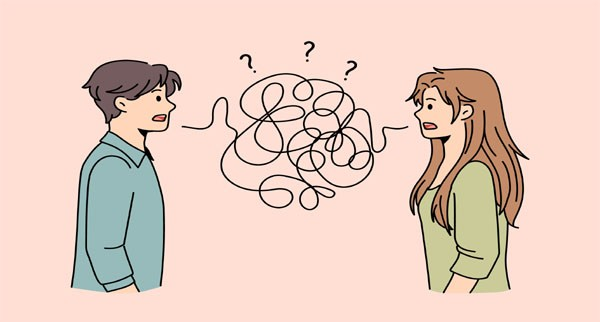
Sometimes people try so hard to be polite that the actual message becomes difficult to understand.
Suppose you know that you cannot finish a task by Friday. Saying, “I will try somehow,” does not give the other person a clear answer.
It would be more useful to explain that you need additional time and briefly mention why.
The same thing applies when you do not understand something.
There is no advantage in pretending that everything is clear just because you do not want to ask a question.
Say, “Could you explain that part again?”
Being direct does not automatically make you rude. You can be straightforward while still choosing respectful words.
7. Take Written Communication Seriously
A large part of Communication Skills now happens through screens.
We send emails, workplace messages, comments, documents, and short texts every day.
The problem with written communication is that the reader cannot hear your voice or see your expression. A sentence that sounds harmless in your head may come across differently on a screen.
Before sending an important message, read it once.
Check whether your main point is easy to understand. Make sure the tone fits the person you are contacting and that you have included the information they actually need.
A casual message to a friend can be short and relaxed. A message to a manager, teacher, or client may need a little more structure.
Clear writing does not necessarily mean writing a long message.
8. Adjust Your Style According to the Situation
You probably do not speak to your closest friend in exactly the same way you speak to a manager. There is nothing strange about that.
Different situations require different communication styles.
A workplace conversation may need more structure. A conversation with a friend can be informal. If you are explaining something to a beginner, you may need to start with basic information. If the person already knows the subject, repeating every detail may only waste time.
Changing your communication style does not mean pretending to be someone else.
It simply means noticing the situation and responding appropriately.
9. Think About the Person You Are Talking To

Before explaining something, consider who is listening.
What do they already know? What information are they actually looking for? Are there words you are using that they may not understand?
For example, someone working in a technical field may be comfortable with industry-specific terms. A person hearing those terms for the first time may have no idea what they mean.
A simpler explanation can make the conversation much easier.
Knowing a subject well and explaining it well are two different abilities.
Good communication involves meeting the listener somewhere in the middle instead of expecting them to understand everything automatically.
10. Stop Interrupting Every Thought in Communication Skills
Sometimes we interrupt because we are afraid we will forget what we wanted to say.
A thought suddenly appears and you feel that you need to say it immediately.
But frequent interruptions can make the other person feel as though their words are not important.
Try waiting for a natural pause.
If you really do not want to forget your point, make a quick mental note or write it down if the situation allows. Then bring it up when the other person finishes.
People will occasionally interrupt each other in normal conversations. That is not unusual.
The problem is when it becomes a regular pattern.
Giving someone enough time to finish can make conversations feel much more relaxed.
11. Communication Skills Become Comfortable With Silence

Silence is not always awkward.
Sometimes people simply need time to think.
This is especially noticeable during interviews. You may be asked a question and need a few seconds to organise your thoughts.
Take those seconds.
You can pause, think, and then answer.
There is no need to fill every quiet moment with “umm,” “actually,” or “you know” simply because you are worried about the silence.
A short pause can help you give a clearer and more thoughtful answer.
5 Common Mistakes to Avoid in Communication Skills
| What People Do | Why It Backfires | Better Approach |
| Rehearsing answers while others speak | You miss context and key details. | Focus entirely on listening until they wrap up. |
| Piling on unnecessary details | The main point gets lost in the noise. | Lead with your core takeaway, then add details if asked. |
| Glancing at screens while talking | Signals that the conversation isn’t a priority. | Put devices face-down during face-to-face chats. |
| Guessing instead of asking | Small misunderstandings turn into big errors. | Ask for quick clarification as soon as you’re unsure. |
| Trying to sound perfect | Triggers anxiety and rigid, unnatural speech. | Speak naturally and accept minor slip-ups. |
How to Start Improving Today

You don’t need to change every habit at once. Pick just one technique to focus on this week:
- Let others finish every sentence without jumping in.
- Take a two-second pause before answering hard questions.
- Trim down your emails so the main request is upfront.
- Practice summarizing a complex idea in two simple sentences out loud.
Master one habit until it feels completely natural, then pick another. That steady approach builds lasting confidence and clear, easy communication across every part of your life.
Frequently Asked Questions
1. What are communication skills?
Communication skills are the abilities that help you express ideas clearly, listen effectively, understand others, and share information confidently.
2. Why are communication skills important?
Good communication can help you build stronger relationships, avoid misunderstandings, work better with others, and express your thoughts more clearly.
3. How can I improve my communication skills?
Practice active listening, speak clearly, use simple language, maintain appropriate eye contact, and pay attention to your tone and body language.
4. How can communication skills improve confidence?
Regular practice can make it easier to express your opinions, participate in conversations, and handle different social or professional situations.
5. What are the most important communication skills?
Active listening, clear speaking, empathy, non-verbal communication, asking questions, and giving or receiving feedback are important communication skills.