
Some days, everything seems normal, but your mind feel Anxiety at all.
You may be sitting at your desk, doing your work, and suddenly start thinking about something that happened earlier. Then you remember another thing you have to do. Then you start worrying about tomorrow. Before you know it, you are physically in one place but mentally somewhere completely different.
That is how anxiety can feel sometimes.
It does not always come from a huge problem. It can start with a small thing too. Maybe you are waiting for a reply, thinking about an upcoming interview, worrying about your studies, or wondering how a conversation is going to go.
And then the mind keeps going.
I think the difficult part is not always the original problem. Sometimes it is everything we add to it in our head.
So instead of trying to become a person who never worries, I think it makes more sense to learn a few ways to handle those moments when the mind gets too busy.
Start by Finding the Real Reason Behind the Anxiety

When I feel like too many thoughts are going around at once, the first thing I would try is to make the worry more specific.
Saying, “I am anxious,” does not really tell you what the problem is.
Maybe the actual thought is:
“I am worried that I will not finish my work today.”
Or:
“I am scared that my interview will not go well.”
Or:
“I keep thinking about what that person said to me.”
Once you put the worry into words, it becomes easier to look at.
Sometimes there is actually something you can do about it.
If you are worried about an interview, you can prepare.
If you have unfinished work, you can decide what needs to be done first.
If you are waiting for someone’s answer, there may be nothing you can do except wait.
That last one can be difficult, but knowing that you cannot control something is still useful.
It means you do not have to keep searching for a solution that does not exist.
Do Not Carry Your Entire To-Do List in Your Head

This is something I think many people do without even noticing.
You have one task to finish.
Then you remember another.
Then you think about tomorrow.
Then you remember something you forgot yesterday.
Suddenly your mind is treating all of these things as if they need to be solved right now.
They don’t.
Pick one.
If you have a lot of work, start with the part that needs your attention first. If you have several messages waiting, answer the important one. If there is something small that can be finished in ten minutes, finish that before thinking about the next thing.
You do not need to organise your whole life in one sitting.
Sometimes one completed task is enough to make the rest look less frightening.
Breaking a stressful situation into smaller, manageable steps is also recommended in guidance for dealing with anxiety and stress. (nhs.uk)
Give Your Mind a Proper Pause

When I am already thinking too much, doing more things is not always the answer.
Sometimes I would rather stop for a few minutes.
Sit somewhere comfortable.
Put the phone down.
Take a few slow breaths.
Look around instead of immediately opening another app or checking another message.
The aim is not to magically become calm in thirty seconds. That expectation can actually make things more frustrating.
It is just a break.
Breathing exercises can be useful for stress and anxiety, and the NHS recommends a simple breathing technique that can be practised for several minutes. (nhs.uk)
If concentrating on breathing does not feel comfortable, you can simply sit quietly for a while.
A quiet five minutes is still better than spending five more minutes feeding the same anxious thought.
Pay Attention to Caffeine

I am not saying you need to completely give up tea or coffee.
For many people, they are simply part of the day.
But if you already feel restless, shaky, or anxious, having a lot of caffeine may make things worse. NIMH recommends reducing excess caffeine as one healthy habit that may help when managing anxiety.
Instead of making a dramatic change, just notice what happens.
Do you feel more restless after several cups?
Does evening coffee make it harder to sleep?
Do you feel different on days when you consume much more caffeine?
If you notice a pattern, try reducing it.
There is no need to turn it into another complicated health project.
Sometimes simply noticing a habit is enough to start changing it.
Sleep Can Affect How You Handle Stress

When you are tired, even ordinary problems can feel much bigger.
Something that would normally bother you for ten minutes can stay in your head for hours.
Poor sleep and stress can also feed into each other. You worry, so you cannot sleep properly. Then you wake up tired, and the next day you have less patience for everything.
That is why I would not treat sleep as something that can always be pushed aside.
NIMH recommends getting enough sleep and keeping a regular sleep routine as part of healthy habits that support mental health. (nimh.nih.gov)
The routine does not need to be fancy.
You could simply stop working a little before bedtime. Put the phone away. Lower the lights. Read something. Listen to music. Sit quietly.
The main idea is to give yourself some time between “I am busy” and “I need to sleep.”
Get Out of the Same Place for a While


Sometimes sitting in the same place and thinking about the same problem makes everything feel stuck.
Getting up can break that feeling.
Go outside for a few minutes.
Walk around the house.
Stretch.
Take a short walk.
Cycle if you enjoy it.
Do some yoga.
It does not have to be a full workout.
Regular physical activity is recommended as one habit that can support mental well-being and help with stress and anxiety. (nimh.nih.gov)
I also think it is important not to turn exercise into another thing you feel guilty about.
If you have only ten minutes, then use ten minutes.
You do not have to wait for the perfect time or the perfect workout.
Take a Break From Your Phone
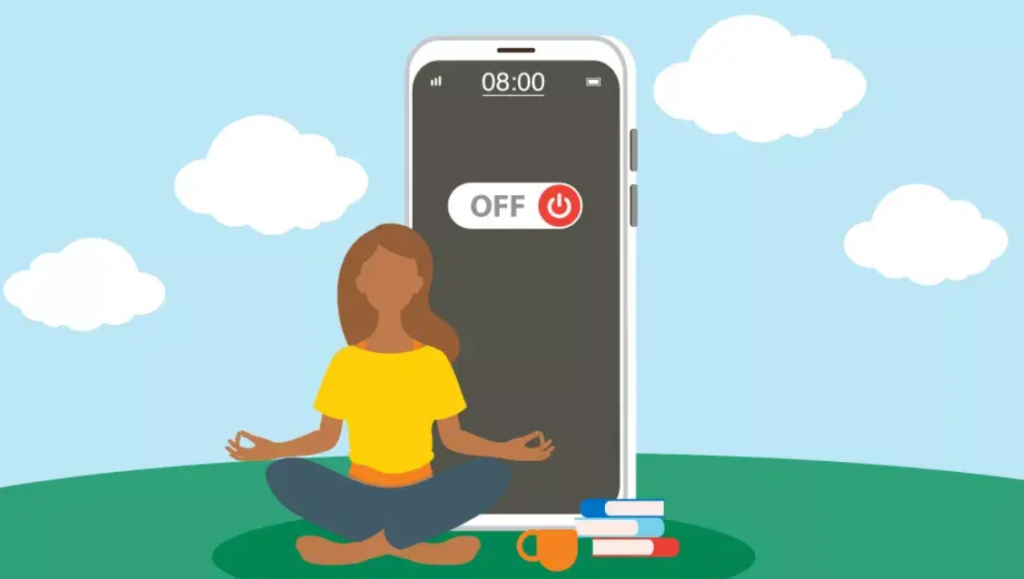
This one is harder than it sounds.
When we are worried, checking the phone can feel like a distraction.
You check WhatsApp.
Then Instagram.
Then another notification.
Then you go back to WhatsApp.
And somehow you are still thinking about the same thing.
The phone did not solve the worry.
It only gave your mind more information to process.
If I am already overthinking, I would rather put the phone somewhere away from me for a little while.
Make tea.
Clean the desk.
Go for a walk.
Listen to music.
Talk to someone.
Or do absolutely nothing for a few minutes.
It can feel strange at first, especially if you are used to checking your phone constantly.
But sometimes a quiet mind needs less information, not more.
Talk to Someone Instead of Keeping Everything to Yourself

Not every conversation needs to end with advice.
Sometimes you just want someone to listen.
If something has been bothering you for a while, talk to someone you trust. It could be a friend, family member, teacher, counsellor, or another person you feel comfortable with.
You do not need to prepare a speech.
You can simply say:
“I have been worrying about something. Can I talk to you?”
That is enough.
NIMH recommends staying connected with supportive people as part of caring for mental health. (nimh.nih.gov)
And if your anxiety is becoming difficult to manage, talking to a qualified professional can be much more useful than trying to hide it or handle everything alone.
Write Down the Thoughts That Keep Coming Back

There are days when the problem is not one particular thought.
It is too many thoughts.
Writing them down can make them easier to separate.
You do not need a special notebook for this.
Take whatever paper is nearby or open the notes app.
Write down the things that are going around in your head.
Do not worry about making the list neat.
Then ask yourself:
- Has this actually happened?
- Is there something I can do about it?
- Is this just something I am imagining?
- Does this need my attention today?
- Can I leave it until tomorrow?
Journaling is included among coping strategies suggested by NIMH for stress and anxiety. (nimh.nih.gov)
You also do not need to write every day.
If it helps, use it.
If it does not, try something else.
Look at Your Normal Routine
Anxiety is not always connected to one major event.
Sometimes the whole day is simply out of balance.
You slept late.
You skipped breakfast.
You have been sitting for hours.
You have not taken a proper break.
You have several unfinished things in your head.
You have spent too much time scrolling.
None of these things sounds like a huge problem.
But put them together and you may feel much more overwhelmed.
NIMH recommends habits such as getting regular physical activity, eating healthy meals, getting enough sleep, making time for relaxing activities, setting priorities, and staying connected with supportive people. (nimh.nih.gov)
You do not have to fix everything at once.
Choose one thing.
Maybe tonight you go to bed earlier.
Maybe tomorrow you take a short walk.
Maybe you finally write down the tasks that have been sitting in your head.
One change is enough to begin with.
What I Would Do in a Very Anxious Moment

If I suddenly felt very anxious, I would try not to solve my entire life at that moment.
First, I would stop.
Then I would sit down somewhere comfortable if I could.
I would take a few slow breaths.
After that, I would ask myself:
“What exactly is bothering me right now?”
If there is something I can do, I would pick one small action.
Not five.
One.
If there is nothing I can do right now, I would try to stop solving it in my head.
I might drink some water.
Walk around.
Put my phone away.
Listen to something.
Talk to someone.
Or just sit quietly.
The goal is not to make the anxiety disappear immediately.
The goal is to get through the next few minutes without letting the anxious thought decide everything for me.
Final Thoughts
I do not think anyone can go through life without worrying about anything.
There will always be things that make us nervous.
An interview.
An exam.
Work.
Family problems.
Money.
Relationships.
Future plans.
Sometimes we simply do not know what is going to happen, and that uncertainty can be uncomfortable.
For me, the more realistic goal is learning how to respond when anxiety appears.
Some days that might mean taking a proper break.
Some days it might mean sleeping earlier.
Sometimes I might need to put my phone away because I know I am making myself more restless by checking it again and again.
Sometimes talking to someone is the better choice.
And if the anxiety is affecting everyday life, getting professional help makes sense too.
I would not try to solve everything at once.
I would ask myself one simple question:
“What can I do about this right now?”
If there is something I can do, I can start there.
If there is nothing I can do, I can leave it for a while.
Not every problem needs an immediate answer.
Sometimes getting through the next small step is enough.
Frequently Asked Questions
1. What are some simple ways to manage anxiety?
There is no single method that works for everyone. Getting enough sleep, staying active, reducing excess caffeine, taking breaks, writing down worries, and talking to someone you trust can all be useful habits. (nimh.nih.gov)
2. Can breathing exercises help with anxiety?
Breathing exercises may help some people feel calmer when they are stressed or anxious. They are simple to practise, but they should not replace professional care when anxiety is severe or persistent. (nhs.uk)
3. Can caffeine make anxiety worse?
Too much caffeine can make feelings such as restlessness or anxiety harder to manage for some people. If you notice that caffeine affects you, reducing your intake may be worth trying. (nimh.nih.gov)
4. When should I talk to a professional about anxiety?
If anxiety is difficult to control or starts affecting your studies, work, sleep, relationships, or normal daily activities, consider speaking with a qualified health professional. (nimh.nih.gov)
5. Can lifestyle changes cure anxiety?
Healthy habits can support mental well-being, but they are not a guaranteed cure for an anxiety disorder. When anxiety is seriously affecting everyday life, professional support may be needed.